
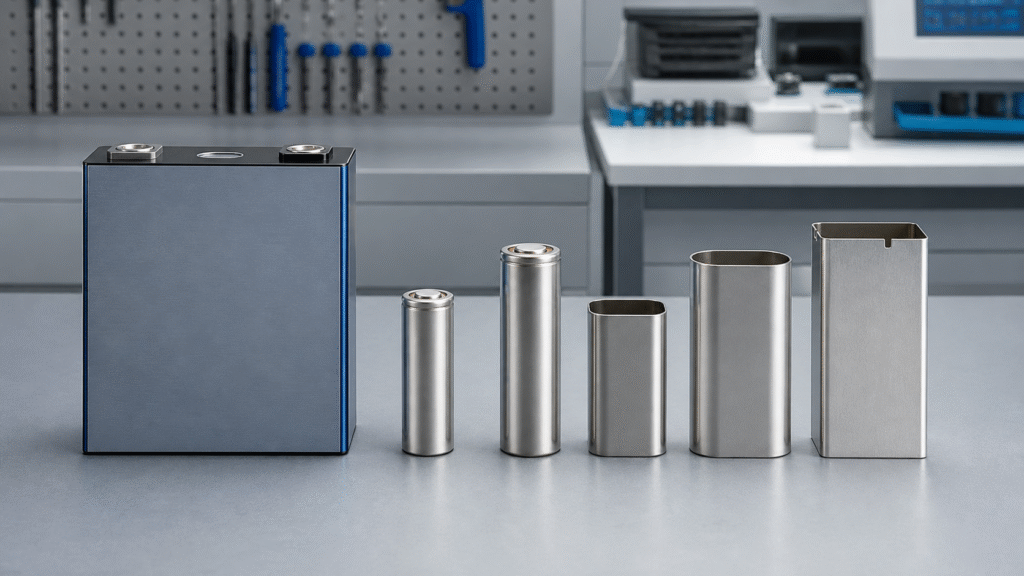
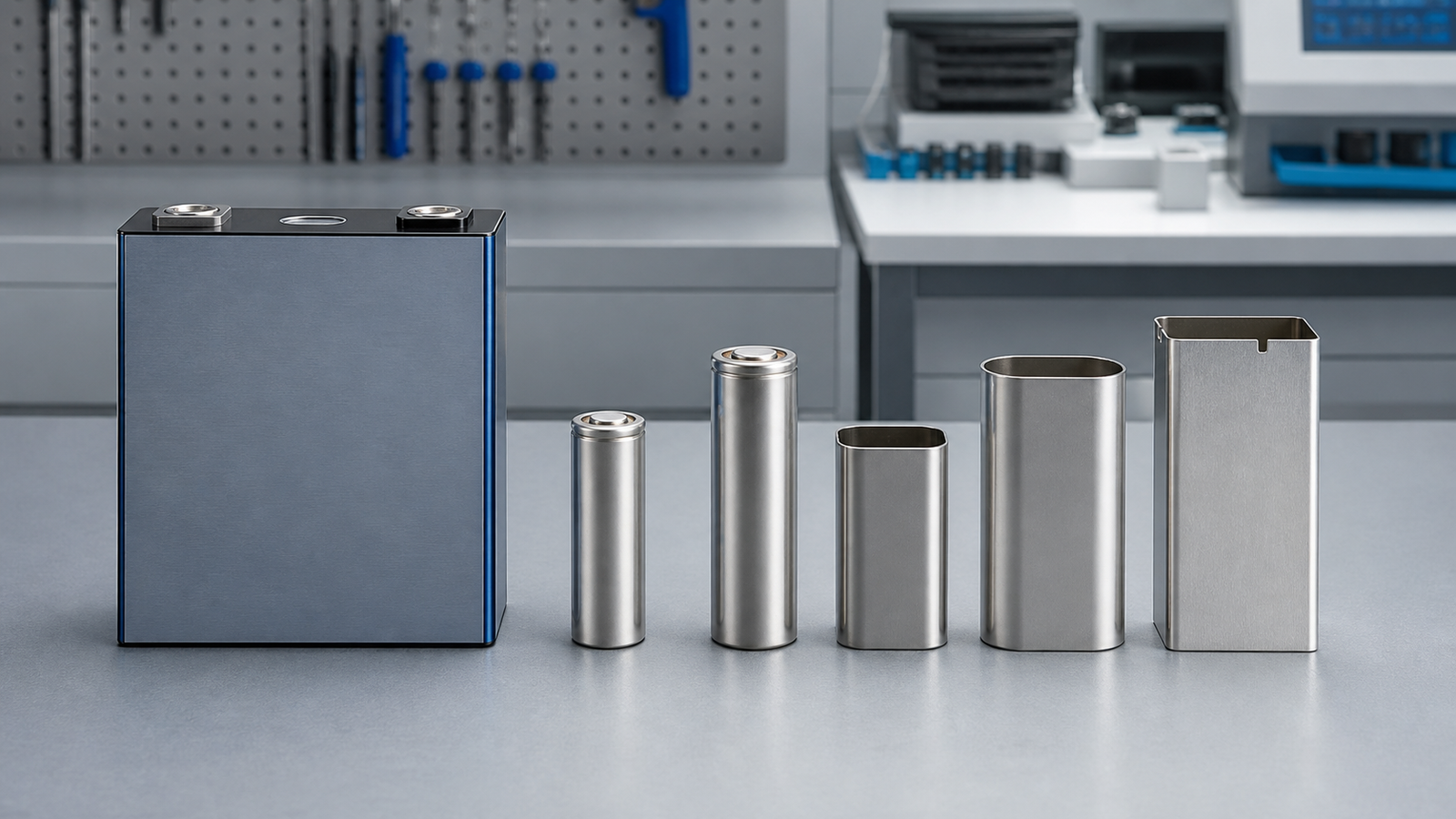
EVE LF105 prismatic battery with 18650 and 21700 cells and battery cases
Battery format influences capacity, thermal behavior, mechanical design, assembly equipment, pack architecture, and serviceability. The EVE LF105 is a large prismatic LFP cell often considered for energy-storage and industrial projects, while 18650 and 21700 cells are cylindrical formats widely used in modular packs. Battery cases also play a critical role by protecting the electrochemical stack and supporting reliable sealing and electrical connections.
Understanding the EVE LF105 Format
The LF105 is associated with a nominal capacity class of approximately 105 Ah and lithium iron phosphate chemistry. Exact specifications, terminal design, dimensions, weight, recommended compression, and operating limits should always be confirmed against the current manufacturer datasheet and the specific production batch.
Large prismatic cells reduce the number of individual cells required in a pack. They can simplify electrical interconnection, but they require suitable busbars, terminal hardware, insulation, mechanical compression strategy, and thermal management. Cell matching and traceability remain important for series-connected systems.
18650 vs. 21700 Cylindrical Cells
The format names describe approximate external dimensions: an 18650 cell is about 18 mm in diameter and 65 mm long, while a 21700 cell is about 21 mm in diameter and 70 mm long. Actual dimensions and terminal details vary by manufacturer.
Compared with 18650, the larger 21700 format can provide more capacity per cell and reduce the number of cells needed for a given pack energy. The 18650 format benefits from a mature ecosystem of holders, welders, fixtures, and pack components. The correct choice depends on cell chemistry, required power, thermal design, available space, sourcing, and assembly automation.
Selecting a Battery Case
A battery case must match the intended cell format and manufacturing process. Important factors include material grade, wall thickness, dimensional tolerance, surface cleanliness, corrosion resistance, vent structure, sealing method, and compatibility with caps, gaskets, terminals, and insulation components.
For cylindrical cells, case consistency affects winding insertion, electrolyte filling, grooving, crimping, and sealing. For prismatic cells, case flatness and weld quality influence assembly and pack integration. Research teams should qualify cases together with the corresponding lids, terminals, gaskets, and sealing equipment.
Procurement and Testing Advice
Do not purchase cells using capacity alone. Confirm authenticity, grade, production date, lot traceability, internal resistance, voltage distribution, storage conditions, and transport documentation. For pack projects, test incoming cells and create a matching procedure before assembly.
Solisn can supply prismatic and cylindrical cells, 18650/21700 battery cases, caps, gaskets, holders, welding equipment, battery cyclers, and pack-development tools. Contact us with your target format, quantity, and application for sourcing support.